



Sisters and Brothers,
One year ago, we released our Policy Document outlining the priorities we wanted governments to act on: energy infrastructure, union training, apprenticeship, stronger labour protections and good jobs tied to public investment.
Since then, IBEW leaders, staff and Local Unions across Canada have continued bringing those priorities directly to decision-makers. We are seeing progress.
This special edition highlights some of that work, along with major developments creating new opportunities for our members.
Canada is facing economic pressure at the same time as historic investments are being planned in energy, infrastructure and industry. The decisions being made now will shape where our members work, how the next generation is trained and the standards that govern that work.
Our responsibility is to stay engaged, measure progress and keep pushing for outcomes that benefit working people.
In Solidarity,
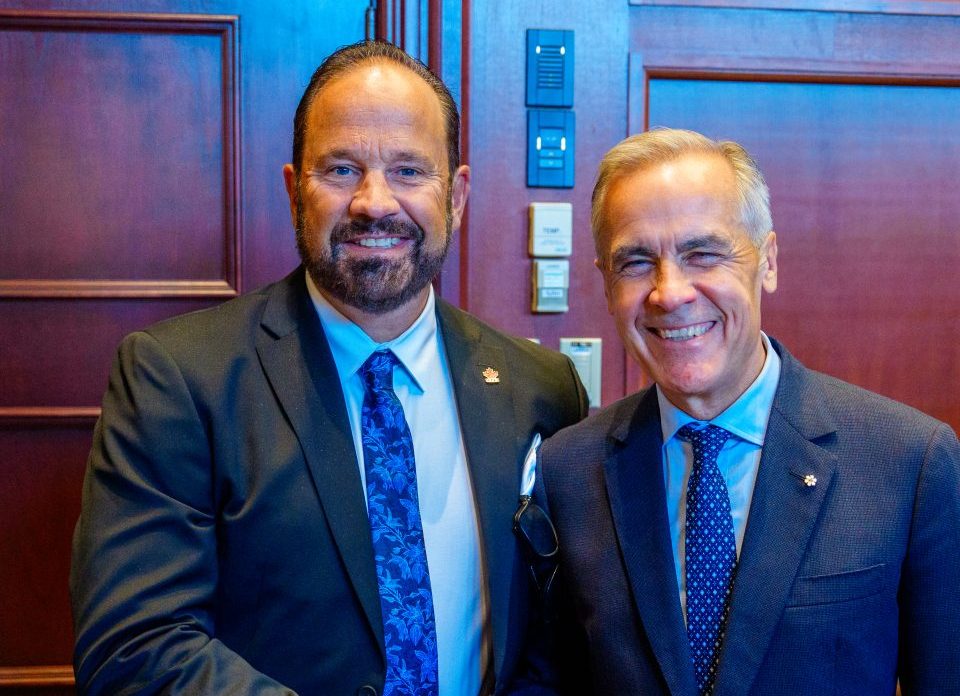
 | RUSS SHEWCHUK International Vice President IBEW First District, Canada |
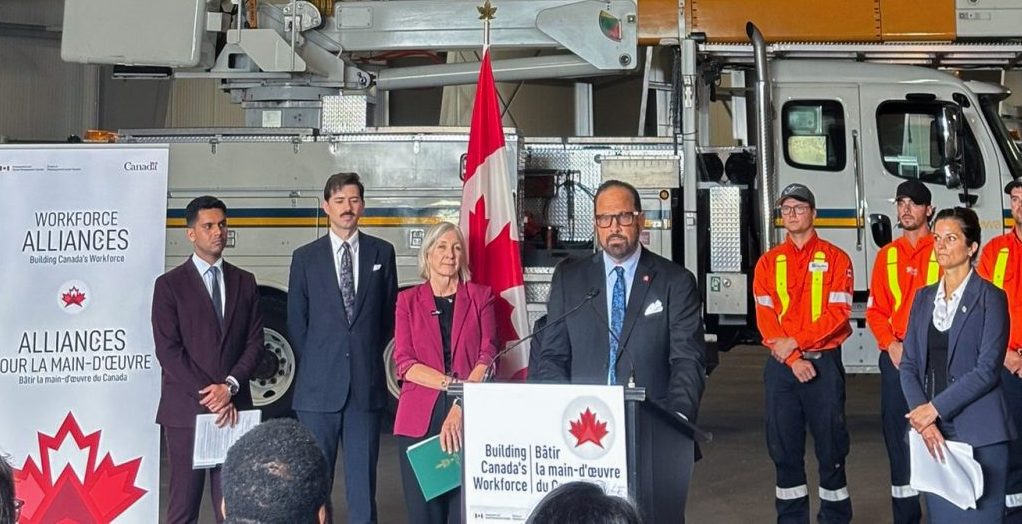
IBEW VOICE ADDED TO NATIONAL ENERGY WORKFORCE PLANNING
IBEW Canada International Vice President Russ Shewchuk has been appointed Labour Ambassador to Canada’s new Energy and Electricity Workforce Alliance.
The Alliance brings labour, industry, education, Indigenous partners and other stakeholders together to address workforce and skills needs as Canada expands its energy and electricity systems.
Shewchuk will serve as the Labour Ambassador, bringing the perspective of skilled trades workers directly into national workforce planning. For IBEW members, this means having a labour voice at the table before decisions are made about the workforce needed to build Canada’s energy future.
His priorities include protecting Red Seal standards, creating stronger pathways into long-term skilled trades careers, improving worker mobility and supporting workers who must travel for major projects.
As Shewchuk said at the launch, workforce planning needs to happen alongside project planning.
Watch Shewchuk’s media address here.
IBEW RECOMMENDATIONS REFLECTED IN FEDERAL LABOUR CONSULTATION
In our last Political Progress Update, we shared that IBEW Canada was participating in federal consultations on potential changes to the Canada Labour Code. The government has now released its findings, and several priorities raised by IBEW are reflected in what it heard from labour.
These include:
- Extending the current 60-day strike mandate.
- Introducing expedited grievance arbitration.
- Strengthening support for first collective agreements.
- Providing increased resources for the Canada Industrial Relations Board and Federal Mediation and Conciliation Service.
- Addressing concerns around the use of Section 107.
For IBEW Canada, these recommendations are grounded in the experiences of our members and councils, including lessons from System Council No. 11.
This is not policy change yet, but it is meaningful progress. Our recommendations are part of the federal conversation, and we will continue pressing to turn that momentum into action.
KEEPING WORKERS AT THE CENTRE OF CANADA’S TARIFF RESPONSE
U.S. tariffs continue to put pressure on Canadian industries where thousands of IBEW members work, including steel, mining, manufacturing, pulp and paper and other resource sectors.
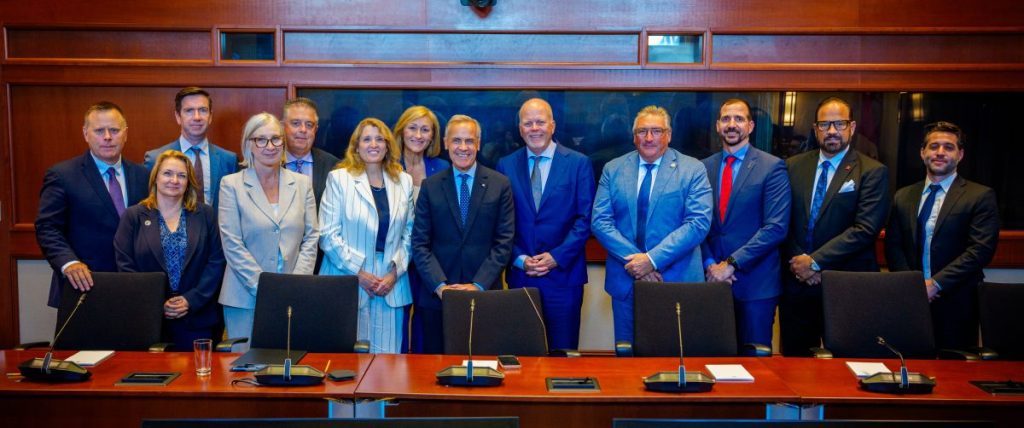
Earlier this month, IVP Shewchuk and Canada’s Building Trades Unions were invited to be part of a round table meeting with the federal government to discuss supports for affected workers and industries.
Recent measures include expanded
employment, training, and business supports. CBTU has also called for major infrastructure, industrial and energy projects
to help create new opportunities for Canadian tradespeople affected by tariff pressures.
Our position remains clear: Workers should not carry the cost of an international trade dispute.
At the same time, Canada must connect short-term relief with long-term opportunity by advancing projects that keep skilled Canadian workers employed.
NEWELL SUBSTATION INVESTMENT CREATES NEW IBEW OPPORTUNITIES
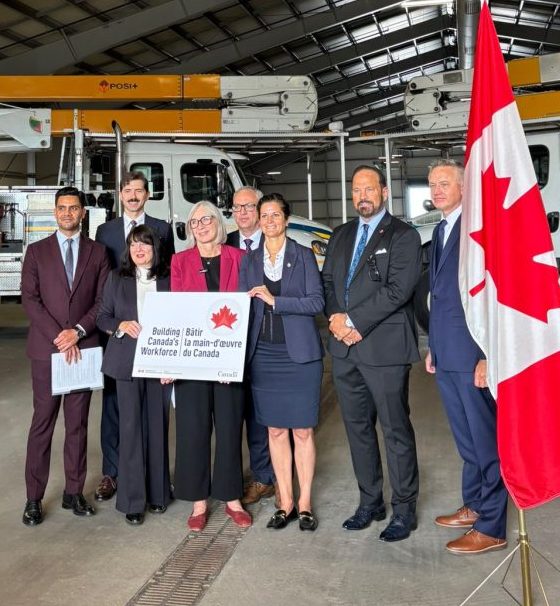
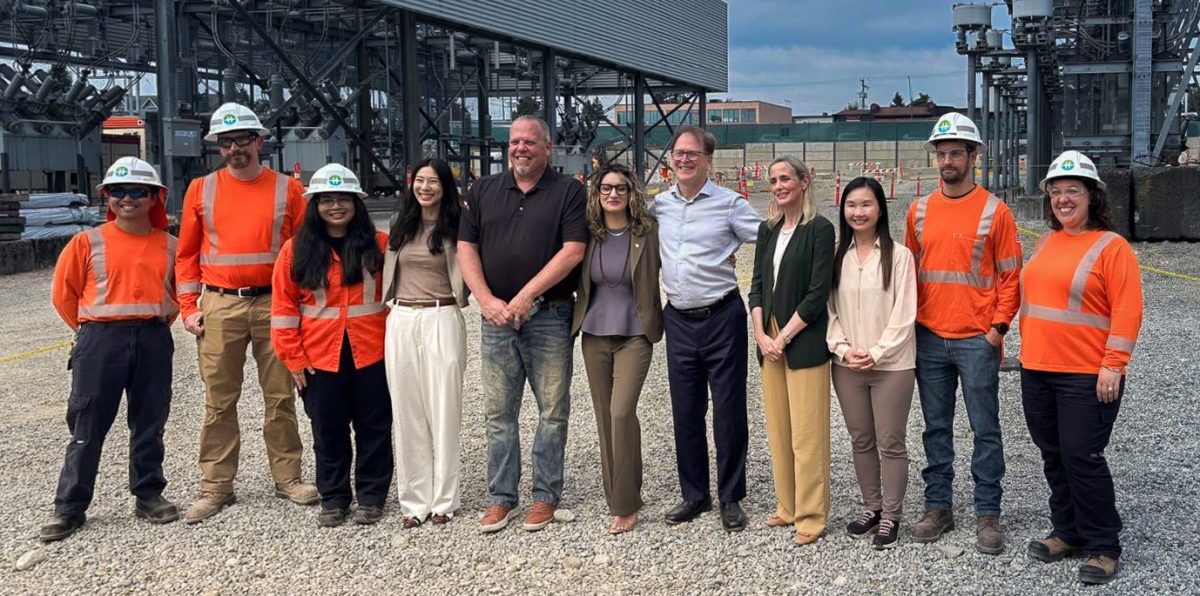
Construction is underway on a major expansion of BC Hydro’s Newell Substation in Burnaby.
The approximately $200-million project will increase capacity for roughly 15,000 additional customers while improving reliability for nearly 60,000 existing customers.
The IBEW was invited to participate in the announcement and we were proud to have International Representative Adam VanSteinburg and Local 258 Business Manager Kevin Duchak in attendance. VanSteinburg addressed the media, highlighting the long-standing role IBEW members play in building and maintaining B.C.’s electricity system.
Projects like Newell are an important part of Canada’s electricity build-out. New generation and transmission cannot succeed without the substations and distribution infrastructure needed to deliver that power.
For IBEW members, these investments mean continued opportunities in construction, maintenance and utility work.
MAJOR PROJECTS MOVING FORWARD
Several projects previously highlighted by IBEW Canada are now moving into new stages.
North Coast Transmission Line
Construction has begun on Phase 1 of B.C.’s North Coast Transmission Line, a 165-kilometre expansion intended to support communities, industry and critical mineral development in northern B.C.
The project was identified in our last Political Progress Update as one to watch. It is now moving into the early construction phase with electrical tenders still to be determined.
Our focus remains on the labour standards, procurement requirements and opportunities available to union contractors and IBEW members.
Churchill Falls and Gull Island
The planned expansion of Churchill Falls, development of Gull Island and new transmission infrastructure in Labrador represent major long-term opportunities for IBEW members who also helped build the original Churchill Falls project and continue to work there today.
For members in Newfoundland and Labrador, these projects could also create opportunities to work closer to home while training the next generation of apprentices.
McIlvenna Bay
Saskatchewan’s McIlvenna Bay mine has begun producing concentrates and is moving toward commercial production.
The project also includes new transmission and substation infrastructure, with future expansion opportunities now being studied.
ONE YEAR OF ADVOCACY: FROM POLICY PRIORITIES TO PROGRESS
One year ago, IBEW Canada released our national Policy Document identifying legislative goals for our members across the country.
Here is where some of that work stands today.
ENERGY INFRASTRUCTURE
Our Ask: Invest in major electricity infrastructure and stronger interprovincial connections.
Progress: Canada has established the Major Projects Office and is advancing major electricity, transmission and energy projects.
Next: Ensure these investments create good union jobs and meaningful apprenticeship opportunities.
UNION TRAINING
Our Ask: Invest directly in union-led, industry-backed training centres.
Progress: The federal government committed $225 million over five years to support union training infrastructure and equipment.
Next: Continue securing investment for IBEW training centres across Canada.
APPRENTICESHIP SUPPORTS
Our Ask: Tie apprenticeship funding more closely to progression and completion.
Progress: New federal measures include up to $400 per week during technical training, a $5,000 Apprenticeship Completion Bonus, Red Seal modernization and additional apprenticeship funding.
The completion bonus has also been made retroactive to April 2025.
Next: Keep reducing barriers that prevent apprentices from becoming certified journeypersons.
STRONGER LABOUR PROTECTIONS
Our Ask: Strong anti-scab protections and federal labour processes that work.
Progress: The System Council No. 11 dispute has become an important real-world test of Bill C-58, including a successful first complaint involving replacement workers.
Next: Press for stronger enforcement and adequate resources for the CIRB.
WORKER EXPLOITATION
Our Ask: Identify and act on misclassification, unfair subcontracting and worker exploitation in parts of the cabling and telecommunications sectors.
Progress: Concerns raised by IBEW have resulted in increased attention from federal enforcement agencies.
Next: Continue pushing for stronger enforcement and accountability.
PROGRESS TO WATCH: LABOUR STANDARDS ON MAJOR PROJECTS
We recommended: Project Labour Agreements, prevailing wages and apprenticeship requirements on federally supported major projects.
Progress: Federal policy is increasingly recognizing the role of prevailing wages, union labour and community benefit agreements in ensuring workers share in the benefits of major investments.
Why it matters: As billions are invested in infrastructure, strong labour standards can ensure public investment creates good jobs, supports apprentices and maintains high standards for the skilled workforce building these projects.
Next: Turn positive policy commitments into clear, enforceable labour requirements as major projects move into procurement and construction.
PROGRESS TO WATCH: MODERNIZING FEDERAL LABOUR LAWS
We recommended: Changes to strengthen collective bargaining, including longer strike mandates, expedited grievance arbitration, stronger first-agreement supports, better-resourced federal labour institutions and greater restraint in the use of Section 107.
Progress: Several IBEW recommendations are reflected in the federal government’s What We Heard report following consultations on potential Canada Labour Code reforms.
Why it matters: These changes could help reduce delays, strengthen collective bargaining and give workers more effective access to the labour processes intended to protect them.
Next: The recommendations are not policy yet. IBEW Canada will continue advocating for them as government considers potential changes to the Canada Labour Code.
ALSO ON OUR RADAR
IBEW Canada and CBTU leaders recently met with Minister of National Defence David McGuinty to discuss more than $82 billion in planned defence infrastructure, including bases, ports and maintenance facilities.
IBEW Canada is engaging early to ensure skilled union workers are part of the conversation as these investments take shape, including discussions around workforce planning, training and security-clearance requirements.
What we’re watching: How these investments move into projects and procurement, and the opportunities they could create for IBEW members alongside Canada’s growing energy and electricity investments.