


The federal government has formed an agency that will combat permitting gridlock on big infrastructure projects, giving the IBEW a powerful tool to organize more work faster.
The Major Projects Office’s mission is to streamline the regulatory process on projects deemed to be in the national interest. This will enable Canada to make more effective use of its massive natural resources in a changing world economy, especially as the ongoing tariff war with the U.S. shows no signs of slowing down and it looks for new trading partners.
That means thousands of more jobs for skilled construction workers — not just now, but for decades to come, said First District International Vice President Russ Shewchuk.
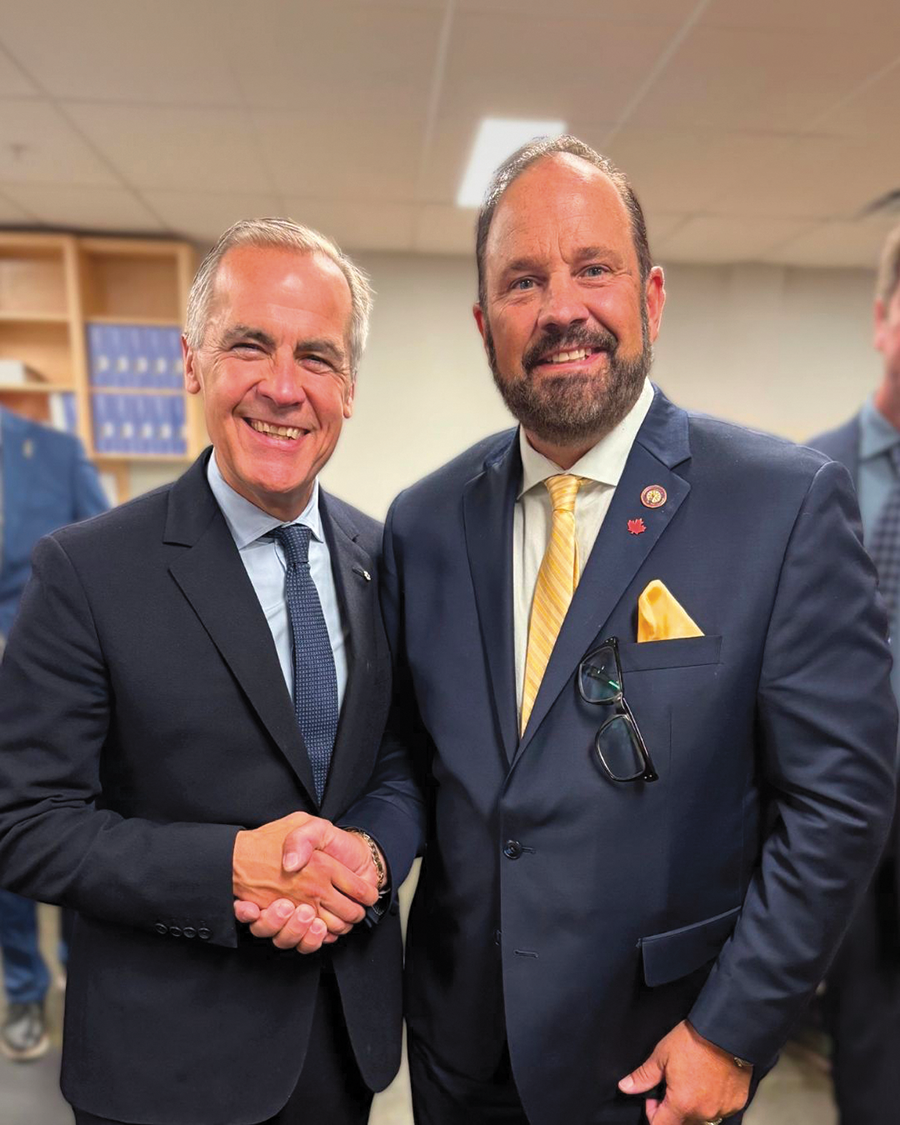
“This is the greatest organizing tool in the history of the IBEW in Canada,” he said. “I’m working extremely hard to share information with our business managers across the country and to ensure our local unions are ready to embrace these changes that are coming.”
Prime Minister Mark Carney followed through on a promise made during the federal election campaign to institute the office. Not coincidentally, it is based in Calgary, Alberta — far away from Ottawa and in the heart of Canada’s energy industry.
Shewchuk and other Canadian building trades leaders have been in regular communication with government officials to ensure that the coming projects are built by skilled union construction workers. That included two days of discussions with federal officials and other stakeholders on Parliament Hill in late September.
A formal agreement has not been reached, but he is optimistic.
“The First District has a front seat during these negotiations,” said Shewchuk, adding that John Zerucelli, the secretary of state for labour, has been a key ally. “This government is opening the door for our advice and our recommendations so these projects can be built at the speed and scale they want them developed,” he said.
“It’s been an excellent, positive experience so far,” Shewchuk added. “I believe the commitment is there. We’re looking to sit down with them further to get these things written down on paper and commitments locked up.”
Carney and Major Projects Office Director Dawn Farrell, a longtime energy executive in the private sector, announced seven new projects in November, including a mine for critical minerals in New Brunswick, a hydro project in Nunavut and a transmission line in British Columbia.
“These projects [were chosen] to reinforce our nation,” Carney said.
That is in addition to five projects announced in September, including work at the Port of Montreal that Shewchuk expects to employ IBEW members.
The office has a mandate of creating good-paying jobs that benefit local communities. It will include clean energy projects and involve Canada’s Indigenous population in all discussions.
There’s no better way to support a community than creating good-paying, family-supporting union jobs, Shewchuk said.
“The biggest thing you can do to invest in your people is to allow them to work under a collective bargaining agreement,” he said. “Society will take care of itself, and people will not be relying on handouts to survive.”
Shewchuk, who has met with Carney himself, said the projects will touch multiple IBEW branches besides construction, including utility, manufacturing and telecommunications. The demand will put even more emphasis on organizing and bringing more people into the Brotherhood.
That’s why he believes it will be the best thing to happen to the building trades. IBEW members showed that they can handle the largest projects when they were instrumental in the Phase 1 building of the LNG Canada and Site C Energy Project in British Columbia. They’ll also play a role in building Phase 2, the largest private-capital project in Canadian history.
“It makes me proud that we’re not only building a strong workforce now, but for the future as well,” he said.
*This article was originally published in the January 2026 issue of The Electrical Worker Online.